
ANZAC Commemorative Assembly
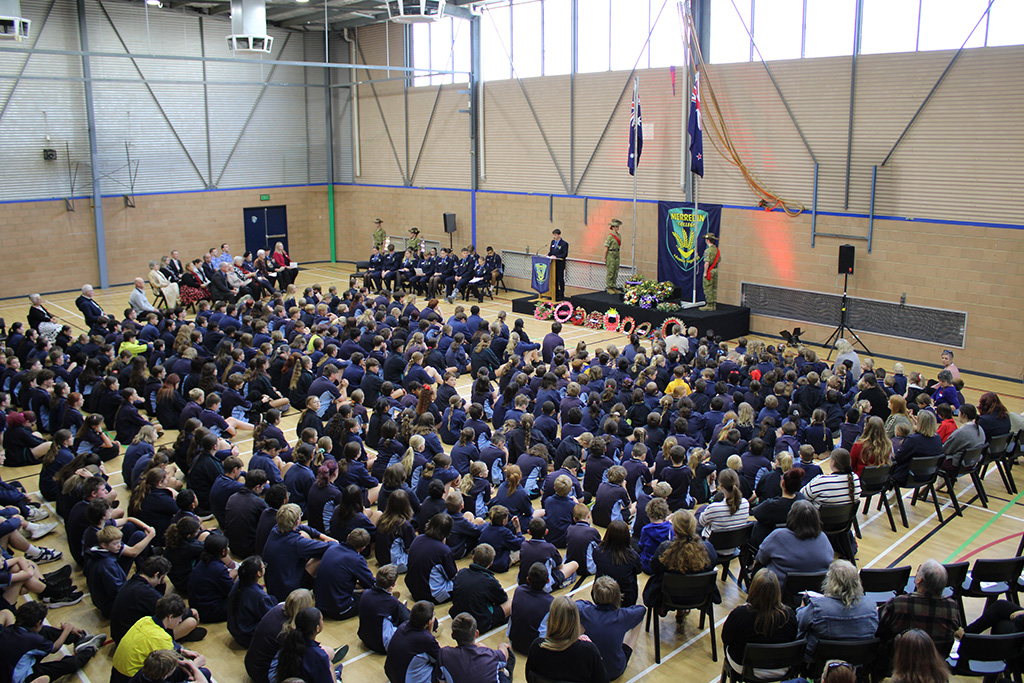
Today we came together as a whole school to honour the servicemen and servicewomen who have served our country. We warmly welcomed our veterans Mr Aub Tompkin, Mr Bob Harrison and Mr Brett Postans, along with Mrs Margret Johnson and Ms Lee Wilcocks; Shire of Merredin CEO, Mr Craig Watts; Western Australian Police Force – Merredin, Officers Tom Holden and Kias Young, Mrs Estelle Madaffari, Merredin College Board Chair and fellow members of the College Board; Mrs Emma Lane P&C President; Principal Mrs Kylie Cattaway and her administration team; along with staff, students, parents and friends.
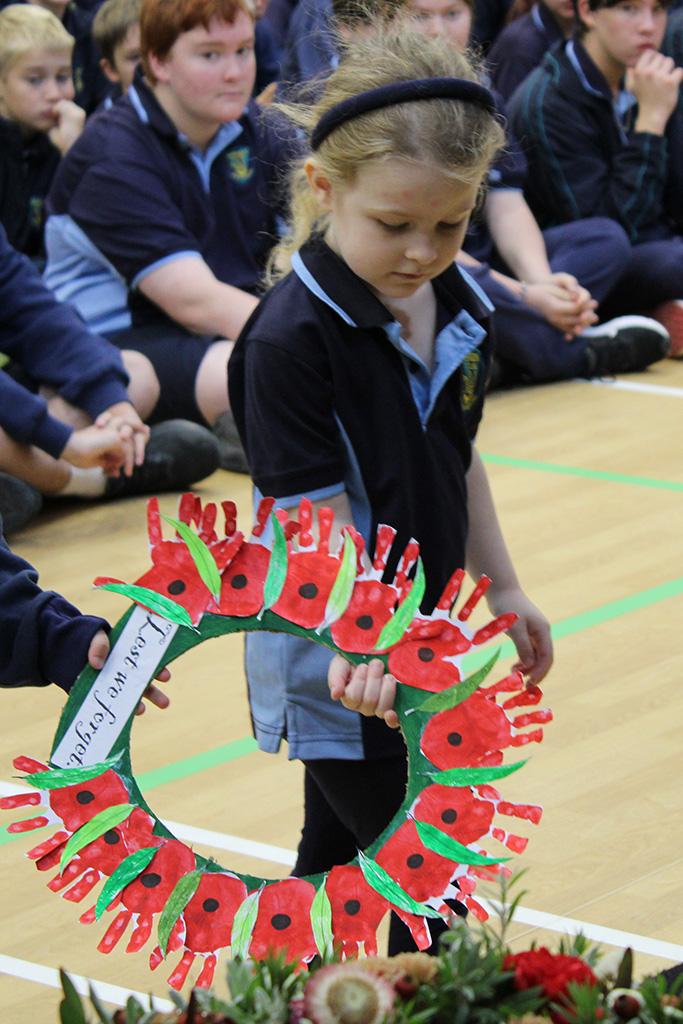
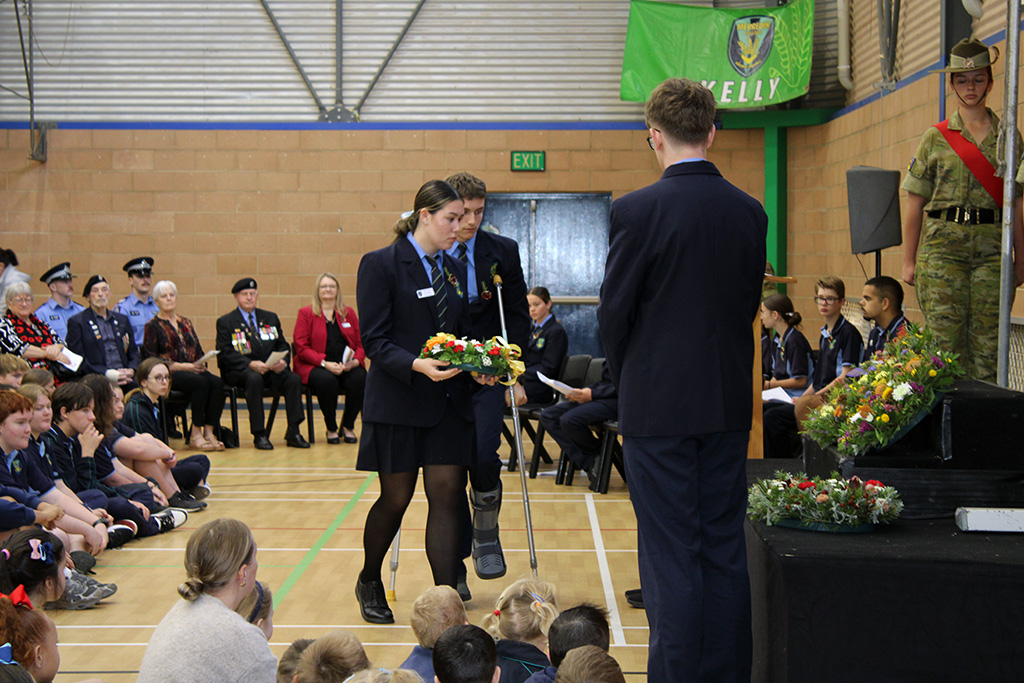
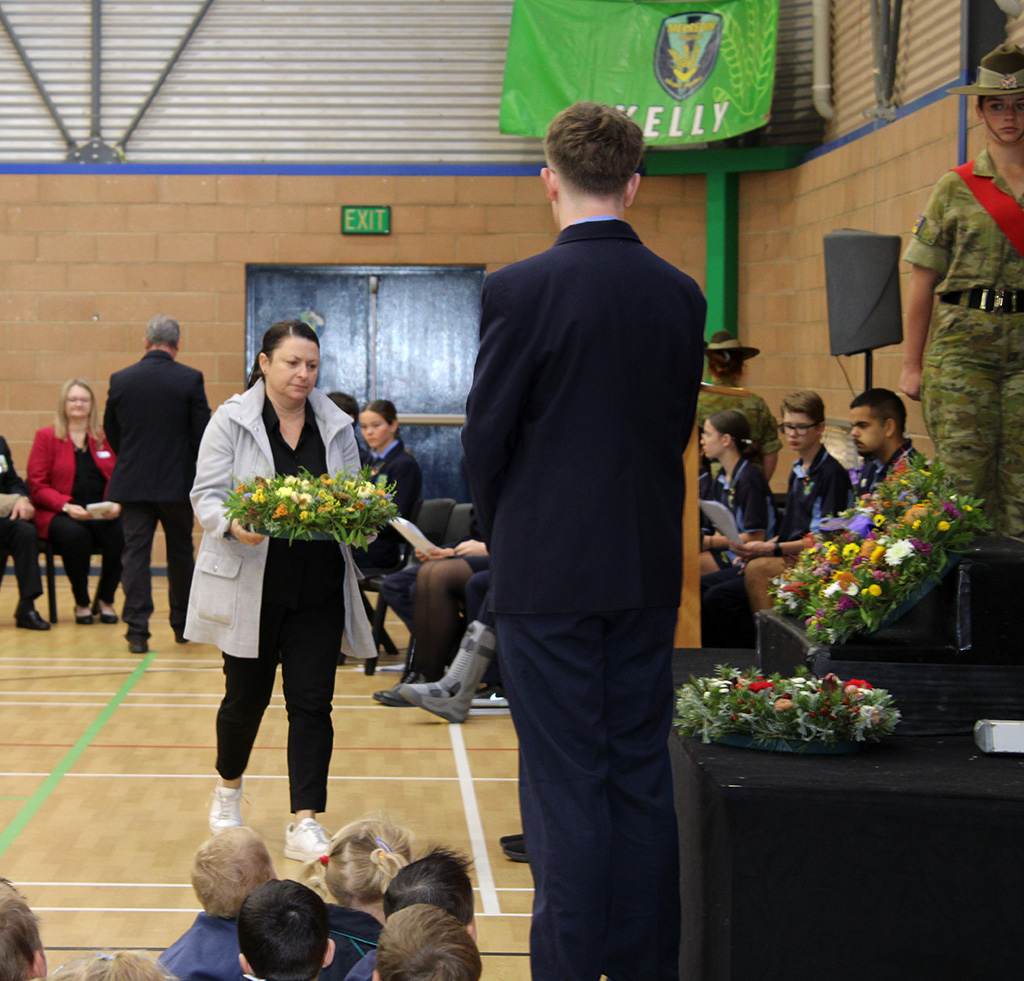
Primary Classes made their own wreaths for class representatives to lay alongside our special guests.
Year 9 and 10 HASS students have been researching the contributions of Australian men and women who have served in the Defence Forces across a range of conflicts, including World War I, World War II and more recent operations. Today, we honoured their service through stories of bravery, sacrifice and commitment.
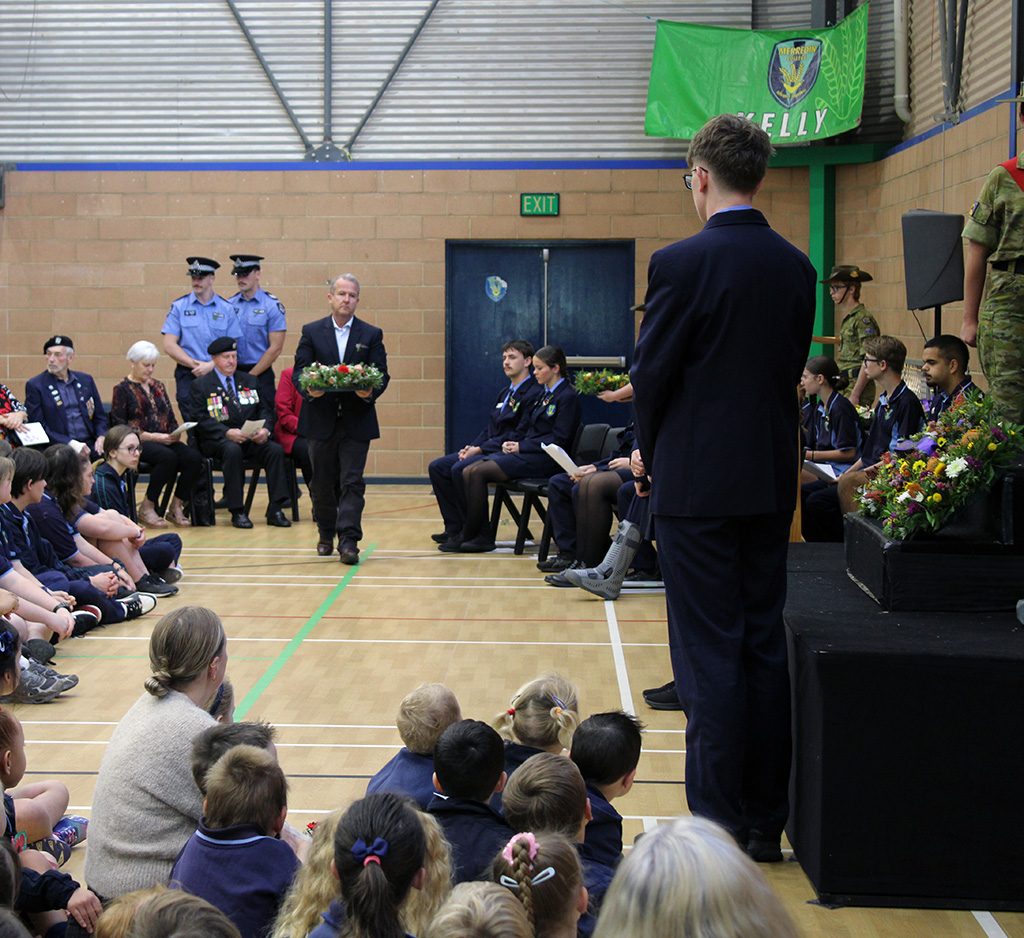
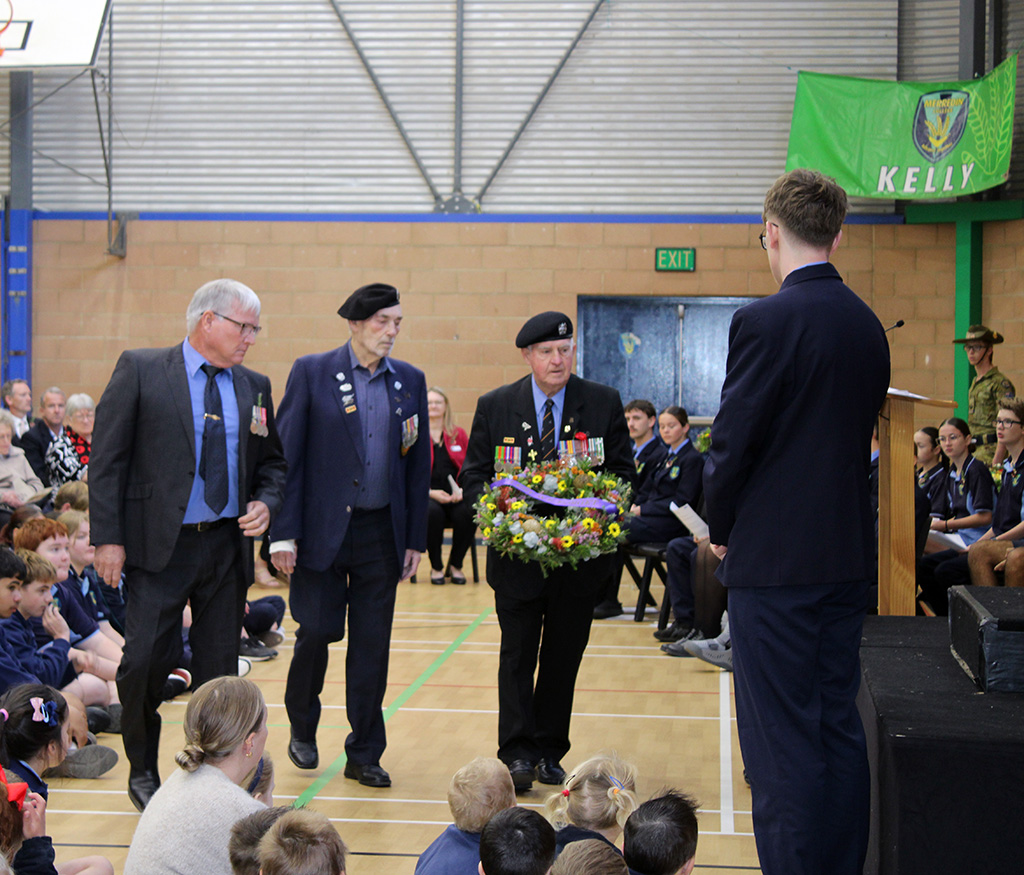
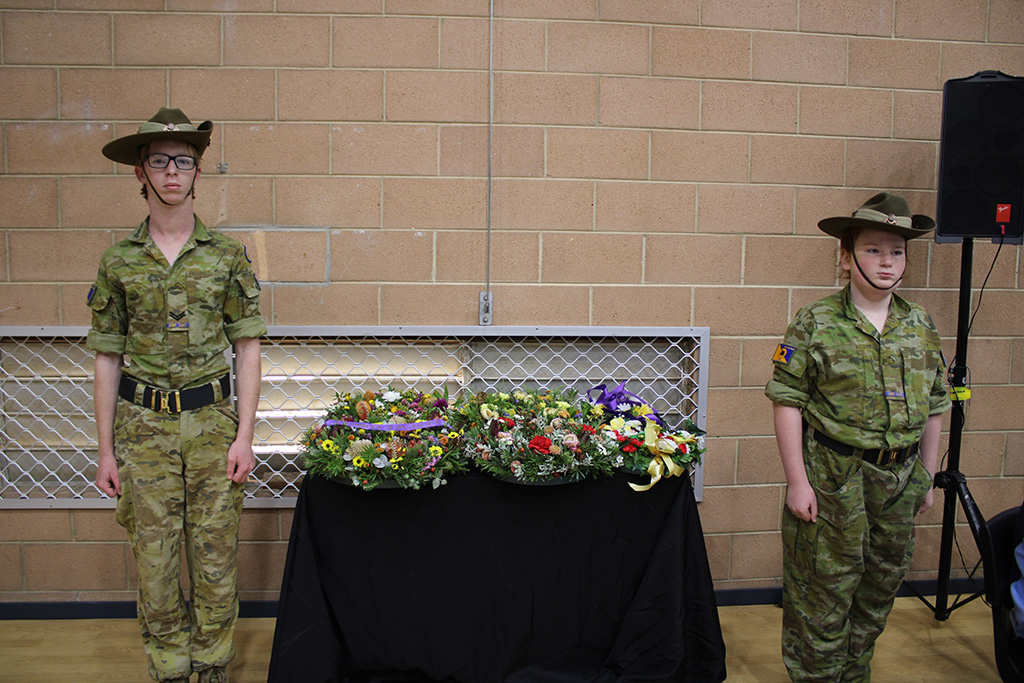
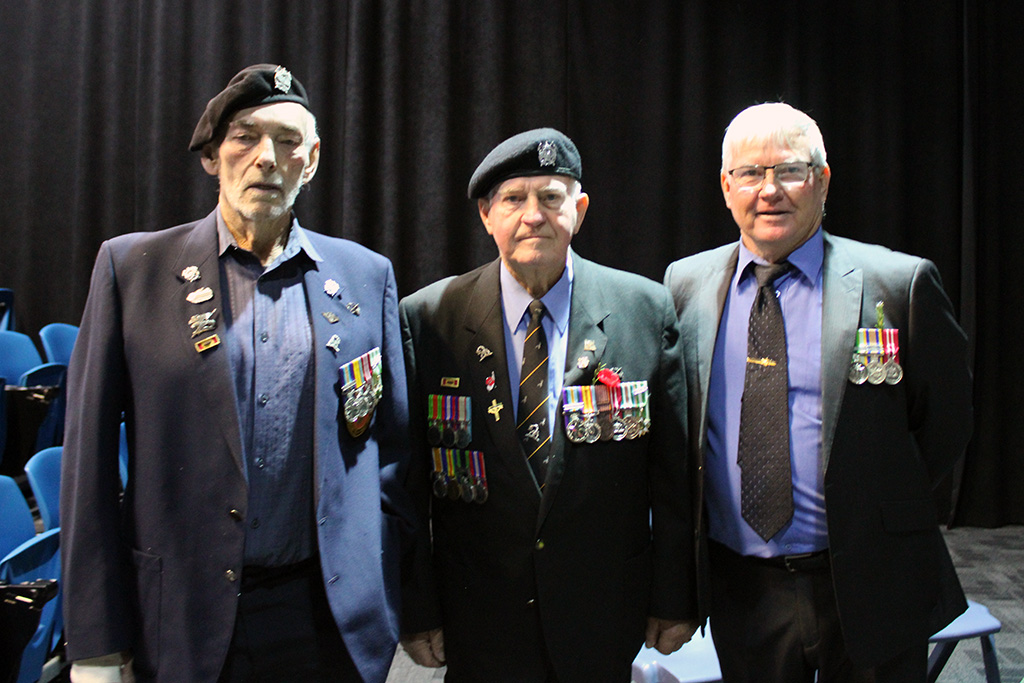
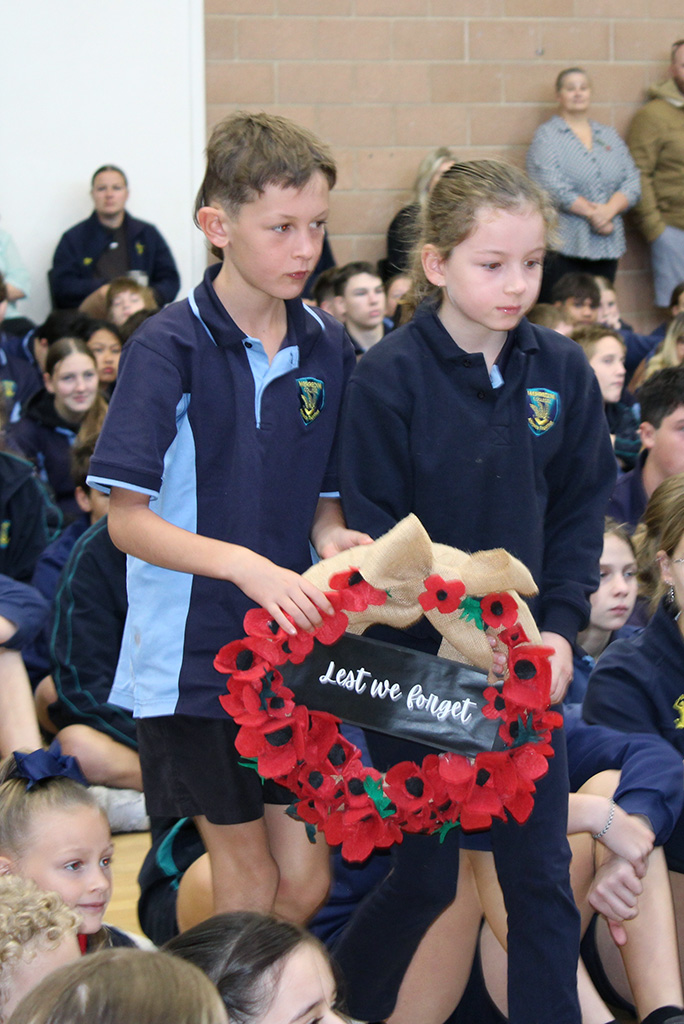
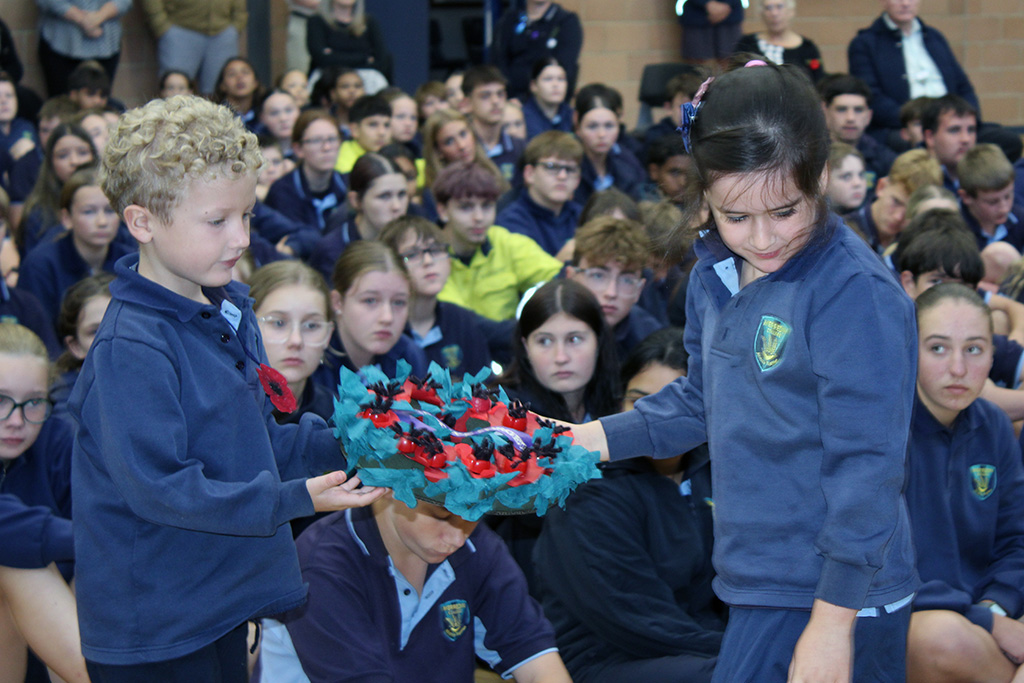
Short Passages were written and delivered by: Jack K, Rachel N, Chloe B and Korben C.
Introduction:
- In Term 1, the Year 9 classes studied the causes and impacts of World War One.
- We then completed a historical analytical essay on these topics.
- Students from the 9.1 HASS class will be reading short excerpts of their learnings.
- Whilst we did not cover the ANZACs in detail, the impacts that Rachel, Chloe and Korben are discussing would have affected these men and their families.
Causes:
- One significant short-term cause of World War One was the assassination of Archduke Franz Ferdinand.
- When he was killed, it triggered a chain reaction in the pre-existing alliance system causing enemy sides to mobilise and turning a local conflict into a global war.
- Another significant long-term factor was militarism.
- This means a country builds up its armed forces and uses that power to solve problems or show military strength.
Finish causes & impact one:
- Before the war broke out, the German government spent the equivalent of 7 trillion Australian dollars preparing themselves for conflict, and many other countries also increased their spending dramatically.
- This ‘arms race’ created a global climate of fear and tension.
- One major impact of the war was the transformation of women’s roles across the world, with many taking on responsibilities traditionally held by men.
- For example, as men boarded ships and left for the frontlines, women were recruited into the industrial workforce to solve labour shortages.
- In Britain, hundreds of thousands of women across the nation worked in munition factories producing weapons, shells and explosives to meet the allies demand with the women handling dangerous explosives like TNT.
- The war created the conditions for the women’s rights movement to continue and strengthen.
Impact two:
- Another long-term impact of the war was the health advancements, mainly in plastic surgery, that shaped medicine today.
- Soldiers were presenting to medics on the frontline with shattered jaws, lost eyes and skin loss from machine guns.
- Doctors used skin grafts to treat these severe injuries and restore the soldier’s humanity. As one patient said, “the result, although far from perfect, meant I had a face again.” They no longer felt like monsters and could move on with their lives post-war.
Impact three:
- The final impact I will be discussing is how World War One advanced the understanding of psychological trauma, more commonly known at the time as ‘Shell Shock’.
- Shell Shock, now known as Post-Traumatic Stress Disorder, was a term to categorise the symptoms caused by war such as shaking, night terrors and extreme paranoia.
- Soldiers experiencing this were perceived as ‘weak’, however, neurologists at the time began to understand it as a diagnosable illness, which helped in acknowledging and understanding mental illness.
Conclusion:
- ANZAC day is a time to reflect on the past and take our understanding of historical events to apply to the fragile global conditions that exist in the world today, keeping our leaders accountable so that similar events are not replicated.